
Insight
March 23, 2026
The 9-to-6 Constraint
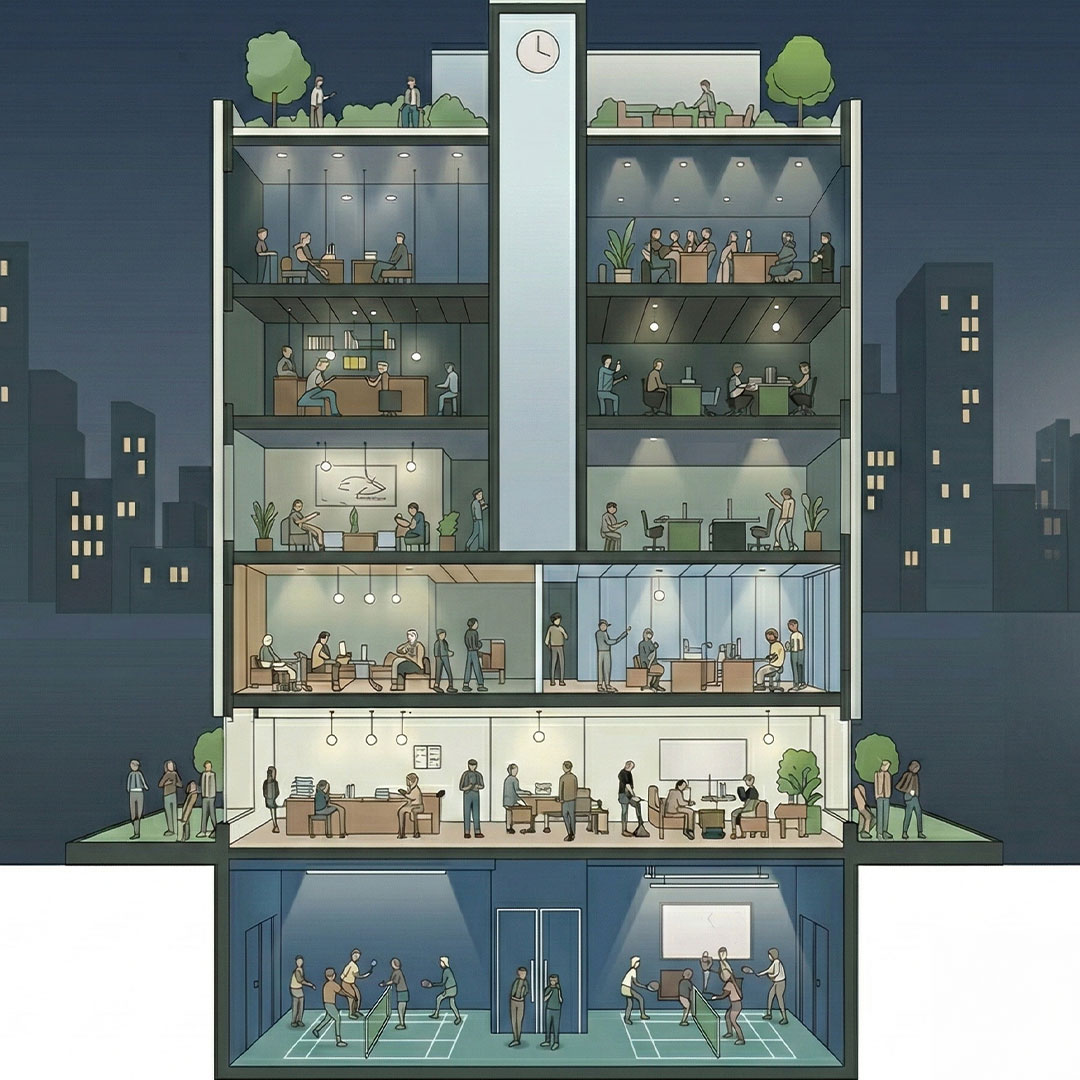
There is a growing gap between how commercial space is leased and how modern districts actually function. Many high-end assets are still locked into an 8-hour operational cycle. While landing a prestigious, Grade A tenant remains the priority, relying solely on that single-user schedule leaves the building functionally dormant for most of the week.
Not every office tower can or should be a 24/7 hub; that isn't a realistic standard for every asset. However, we have to recognize that when a building is operationally "closed" outside of office hours, the capital is underutilized.
One useful lens could be operational permeability.
It might be worth considering whether the ground and lower levels add utility that the district actually lacks. Whether it’s specialized wellness, social spaces, or high-touch services, these shouldn't be viewed as just "amenities"—they are often the reason a building stays active and relevant when the office lights go off.
If an asset remains a passive container for a single 9-to-6 shift, it becomes increasingly vulnerable to market shifts. Protecting the value of a prestigious building requires an operational strategy that makes the asset a useful part of the neighborhood, rather than a locked box after sunset.
How are you seeing landlords manage the friction between the expected exclusivity of a Grade A tower and the push for a more porous, multi-use vertical stack with more 'after-hours' district utility?
Read the original discussion on LinkedIn →
© 2026 PLACE Developments Limited | EAA Licence No. C-106464