
Insight
February 09, 2026
Identifying Hidden Asset
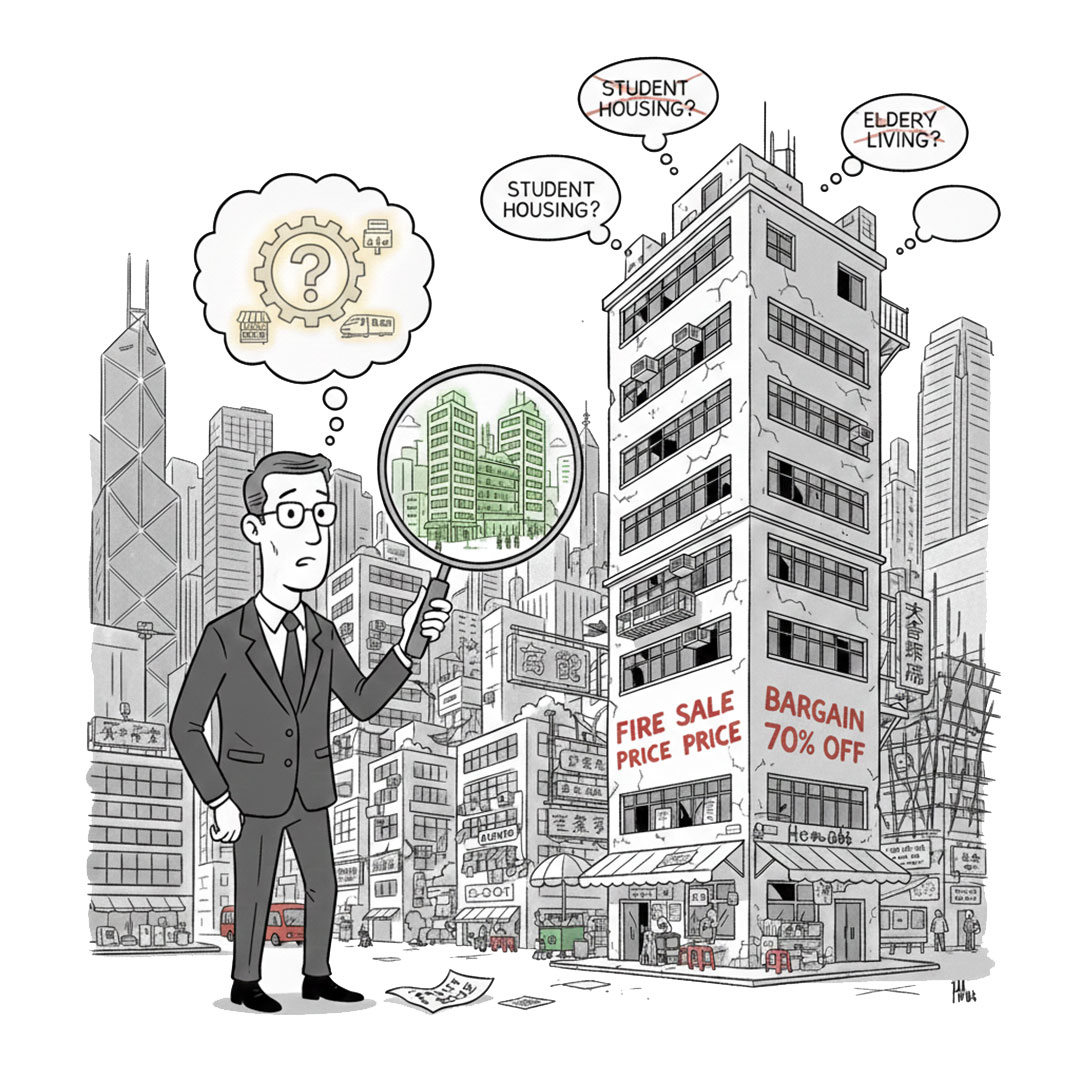
There has been a lot of talk in Hong Kong lately about “unlocking” distressed assets. Much of it circles around conversions into student housing or senior living—logical responses given the aging population and the direct government policy currently incentivizing these shifts. These uses are vital, yet the question I keep turning over is how we ensure these transformations remain relevant beyond a single demand cycle.
A good price and a prime location might catch the eye of those currently looking for a bargain, but one of the key factors for long-term viability is whether the transformation is enduring and integrates with the daily rhythm of the community. Retail modes are shifting and lifestyles are evolving. The hidden asset, perhaps, is not just the building itself, but its potential to adapt and remain a resilient part of the city—serving more than just the immediate needs of one specific demographic.
For the investor, this isn't just about the adapted use; it’s also a fundamental exit strategy. True resilience is what protects an asset's valuation through market cycles. We must ensure that what we invest in today remains an attractive, liquid asset for the next buyer tomorrow—one that is valued for its integration into the city's fabric, not just its current label.
The challenge is looking past the "policy noise" and asking: how does this asset contribute to a Hong Kong that is still a global competitor ten years from now?
Read the original discussion on LinkedIn →
© 2026 PLACE Developments Limited | EAA Licence No. C-106464